Tradigital Hope: One Mission, Multiple Doors
by Ele Lunzaga, Ph.D.
The mission has not changed. But the mission field has.
That reality takes on added significance as the Seventh-day Adventist Church moves toward OneVoice27, a global evangelistic initiative launched September 5, 2026, that will unite members worldwide in sharing a message of hope in September 2027 through personal outreach and multiple media platforms.
Within this global movement, Southern Luzon Philippine Union Mission (SLPUM) is advancing Tradigital Hope as its strategy for the next quinquennium—a framework that brings traditional and digital approaches together in one disciple-making journey.
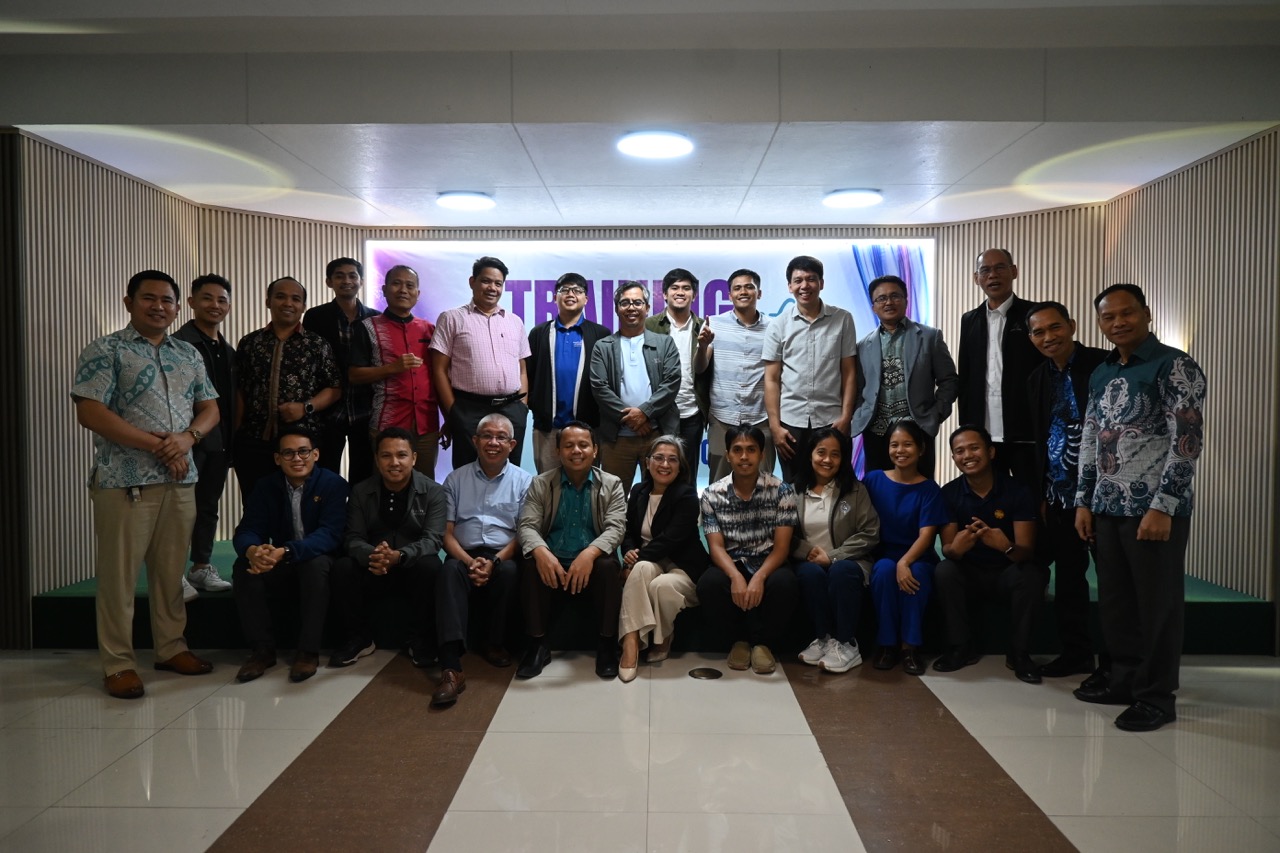
Church leaders introduced this strategy during a two-day Training of Trainers workshop held September 17–18, 2026, at SLPUM headquarters in Lipa City. The workshop was designed to equip core teams to prepare local churches for disciple-making in both physical and digital spaces. It brought representatives from Cavite Mission (CM), South-Central Luzon Conference (SCLC), Adventist University of the Philippines (AUP), and Philippine Publishing House (PPH). The Lipa City session was the latest in SLPUM’s rollout following similar trainings in Bicol, Palawan, and Mindoro.
Among the participants were Ms. Charissa Uy, AUP communication officer, and Dr. Ele Lunzaga, AUP Development Communication department chair— their presence underscoring one of Tradigital Hope’s core dimensions: the role communication plays in opening doors to people online and moving those first encounters toward meaningful relationships and discipleship.
Tradigital Hope is not a digital project. It is a way of doing mission that recognizes people can encounter the gospel through different doors — a personal visit, a medical mission, a Bible study, a social media post, a conversation, a digital platform — and that any of these encounters can become part of one continuing journey toward discipleship.
As Pastor Gerardo L. Cajobe, SLPUM president, put it during the training: “Tradigital ministry is not two missions. One mission using multiple doors.”
The Mission Field Has Expanded
For Pastor Cajobe, the rise of the digital world doesn’t mean the church has been handed a new mission, only another mission field. He likened the digital environment to a contemporary space the church must be willing to enter, our modern-day “Samarias”, much as Jesus crossed social and cultural boundaries to reach people during His earthly ministry.
Technology, he emphasized, cannot replace the spiritual foundation of the work. “The digital world does not replace the Holy Spirit,” he said.
That distinction is fundamental to Tradigital Hope: technology doesn’t drive the ministry — it’s placed within a larger, Spirit-led mission of making disciples.
More Than A Digital Presence
The difference becomes clearer in how success is defined.
Tradigital Hope does not measure success simply by views, likes, followers, or viral posts. Pastor Cajobe explicitly stated that the goal is to see people encounter Christ, grow in faith, and become disciples.
The questions get more personal: Did somebody encounter Jesus? Did somebody receive prayer? Did somebody begin studying Scripture?
These questions shift the focus from digital engagement to spiritual transformation. A post may draw thousands of views without producing a single relationship; a single conversation may become the start of someone’s spiritual journey. That’s why the training kept returning to one idea: behind every screen is a person, a person with a family, with fears, with questions in life, with battles and wounds, with aspirations and longing.
One Journey, Two Pathways
Pastor Relino Urbi, SLPUM OneVoice27 Committee chairman, and Pastor Orbe, SLPUM Communication director and OneVoice27 secretary, framed Tradigital Hope as a disciple-making journey that integrates traditional and digital entry points. The traditional pathway follows six stages: Prepare, Plant, Cultivate, Harvest, Preserve, Commission, while the digital pathway moves through Create, Connect, Care, Call, Cultivate, Commission.
The two are not meant to operate as parallel ministries but they are meant to intersect. A community activity can lead to a personal relationship. A social media post can lead to a conversation. A digital conversation can lead to prayer. Prayer can lead to Bible study. Bible study can lead to a relationship with a local church.
Tradigital Hope requires collaboration across ministries with NDR-IEL (Nurture, Discipleship, and Retention – Integrated Evangelism Lifestyle) or Personal Ministries, Communication, Ministerial, Youth, and information technology working together. Other ministries can contribute content based on their areas of expertise.
The question is not which channel is better — it is how the channels work together to move a person forward in the faith journey.
Hope Daily: Opening the Digital Door
Hope Daily, SLPUM’s public-facing platform, was built to reach a broader audience — people outside the Adventist community — through content on health, family, relationships, work, money, purpose, faith, and everyday life.
The training set out five principles for Hope Daily: start with people, speak their language, let hope lead to Jesus, make it human, think beyond the post. In practice, that means dropping church jargon and communicating in a way that’s warm, conversational, compassionate, hopeful, practical, and nonjudgmental.
Again, the goal is not engagement for its own sake, but to create openings for genuine connection. Communication, in this framework, is an entry point, not the destination.
From A Click to A Conversation
Digital content alone is not enough for discipleship. When someone responds, the journey continues through Hope Beacon, a church-based digital platform built for deeper interaction, developed by Ruben Klyde Carpizo, an AUP Development Communication alumnus. The platform facilitates deeper interaction through chat, lessons, appointments, a library, and prayer.
The Hope Beacon team works within the local church and includes a Pastor or Elder, Creators, Engagers, Distributors with the app also providing Director, Explorer and Guide roles. Guides are approved by the local church board, helping ensure that digital encounters can move toward personal and deeper spiritual engagement.
An Explorer is someone who first encounters the ministry digitally. The Engager builds a two-way conversation while the Director profiles the Explorer and matches them with a Guide, who then provides closer, personal accompaniment. Through this process, a digital encounter can move from content to conversation, from conversation to care, and eventually toward deeper spiritual engagement.
The one-on-one principle sits at the center of it all: technology enables the connection, but a person walks alongside another person.
Digital Does Not Mean Distant
This is where Tradigital Hope moves past the idea of “online ministry.”
In the “Go IRL (In Real Life) + Online” session, Mrs. Diovelyn Cajobe reminded participants that digital relationships must ultimately connect to genuine human care. Drawing on the parable of the Good Samaritan, she urged participants to notice people easily overlooked — a quiet friend, a missing church member, someone sitting alone.
“A message can begin a conversation,” she said. “A call, prayer, or visit can deepen it.”
The principle, in short: online opens the door; real life walks through it. For Mrs. Cajobe, faith cannot stay something communicated only through a screen. “Hope is not something we post but something we live,” she said.
A Church-based Digital Mission
This emphasis on personal connection is why Hope Beacon is built as a church-based system. The local church is not merely a recipient of digital contacts. It becomes the community where digital seekers find people who will listen, pray, study Scripture with them, and walk alongside them.
The training emphasized that digital pathways should ultimately lead people toward the physical church — a point echoed in the Hope 30 vision. These are urban churches across SLPUM envisioned as Hope Centers, where the Hope Beacon pathway can take root.
One potential example is the Philippine International Church (PIC). Set within a large community of digital natives, PIC provides one local setting where the Tradigital Hope approach could connect digital engagement with an existing physical church community.
Traditional and Digital, Together
None of this makes traditional ministry obsolete. Personal visits, family Bible studies, health programs, literature, community activities, and face-to-face relationships remain vital avenues of mission. What is changed is the recognition that these approaches can now work alongside digital channels.
A person might first encounter hope online and later attend a physical event. Another might meet a church member through a community activity and later carry the conversation online. Someone else might request prayer through a digital platform and eventually enter a Bible study. The pathway is not always linear — what matters is that the church recognizes the different doors people enter through and offers a coherent journey beyond that first encounter.
The work is personal
Throughout the training, technology stayed secondary to relationships. A digital platform can connect two people, but it cannot care for a person. Content can answer a question, but a disciple-making relationship requires listening. A social media post can introduce an idea, but spiritual growth requires sustained engagement.
That’s why Tradigital Hope leans on discipleship rather than digital reach alone — and why the training paid close attention to the people behind the system: Creators, Engagers, Guides, Directors, and other ministry workers equipped to respond meaningfully to those who enter through digital doors.
One Mission, Multiple Doors
Closing the training, Pastor Danilo F. Fiecas, SLPUM Executive secretary, brought the discussion back to its spiritual foundation. The church, he reminded participants, is called not merely to inform but to make disciples. His closing message rested on three principles: believers are sent to make disciples, the Holy Spirit gives power, and God gives the increase.
That may be the simplest way to understand Tradigital Hope: not traditional ministry versus digital ministry, not a technology project, not a strategy for collecting followers — but one mission using multiple doors, meeting people where they are, beginning relationships, nurturing faith, connecting them with the church, and helping them become disciples who make disciples.
As the Church moves from the September 2026 launch of OneVoice27 toward the coordinated evangelistic emphasis of September 2027, the challenge is not simply reaching people through more channels — it’s ensuring those encounters lead to relationships, spiritual nurture, and discipleship.
The mission has not changed. The doors have multiplied.