
About AUP
AUP HISTORY
Humble Beginnings
The Adventist University of the Philippines (AUP) traces its roots and humble beginnings to missionary-oriented people who had a strong desire to prepare young people for service in the different branches of Christian ministry and, ultimately, for citizenship in God’s kingdom.

The coming of Elder L.V. Finster in 1908 as a pioneering missionary led to the conversion of young Filipinos to Adventism: Bibiano Panis, Emilio Manalaysay, and Leon Roda. These newly converted Filipino Adventists impressed Elder Arthur G. Daniels, president of the General Conference of the Seventh-day Adventists (SDA), with the need to build a school for the Adventists in the Philippines.
Pasay Campus
The matter was presented to the General Conference Committee. In due time, a small amount of money was raised and used to purchase a 2-hectare lot (worth USD6,500, equivalent to PhP13,000 then) at the corner of Donada and San Juan Streets in Pasay City, now the location of the North Philippine Union Conference of Seventh-day Adventists. The rest of the money was used to purchase lumber for the construction of the school’s first building.
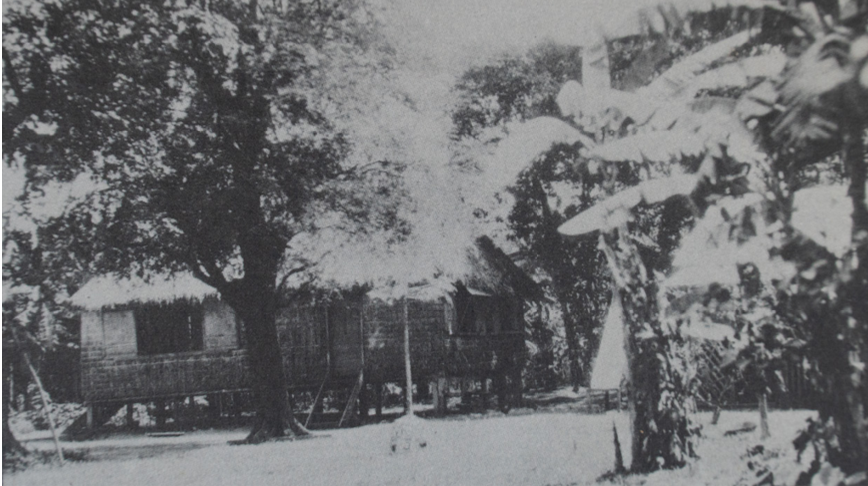
The Philippine Seventh-day Adventist Academy was opened on June 12, 1917, with 10 faculty and staff and 36 students.
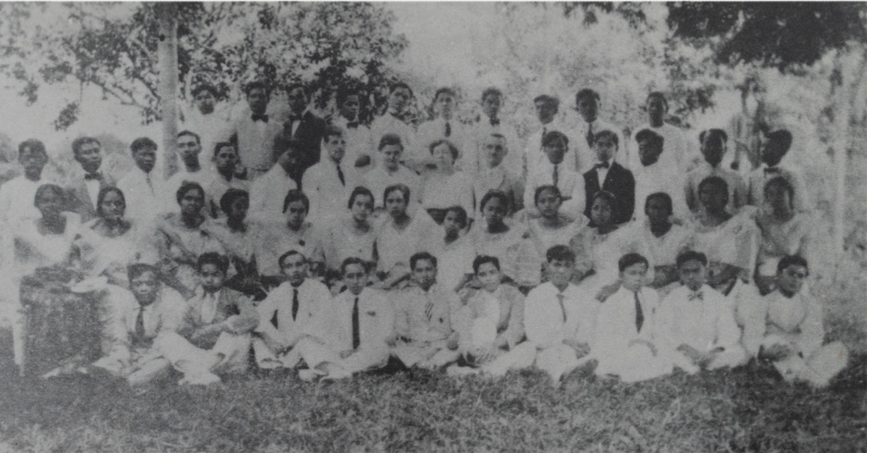
Part of the curriculum was the work program that helped students earn money while they studied. The first faculty were Professor Irving A. Steiniel, the principal and business manager, and Professor Oliver Fisk Sevrens, the preceptor. Both had come to the Philippines with their families as missionaries. Brother Marciano A. Roxas was the first Filipino teacher. At the Spring Council of the Far Eastern Division in 1925, it was voted that the Academy be authorized to carry 14 grades, adding one grade each year until 1927, and that the name be changed to Philippine Junior College. Elder W. B. Amundsen was elected principal in 1927 and served until 1931.
Baesa Campus
Towards the end of 1927, a 26-hectare parcel of land was purchased in Baesa, Caloocan, then part of Rizal province, for P65,951.95 to accommodate the increasing number of students. Prof. Lawrence M. Stump, president of the College in 1931, directed the construction of the buildings. The school finally moved to Baesa Campus in 1932.
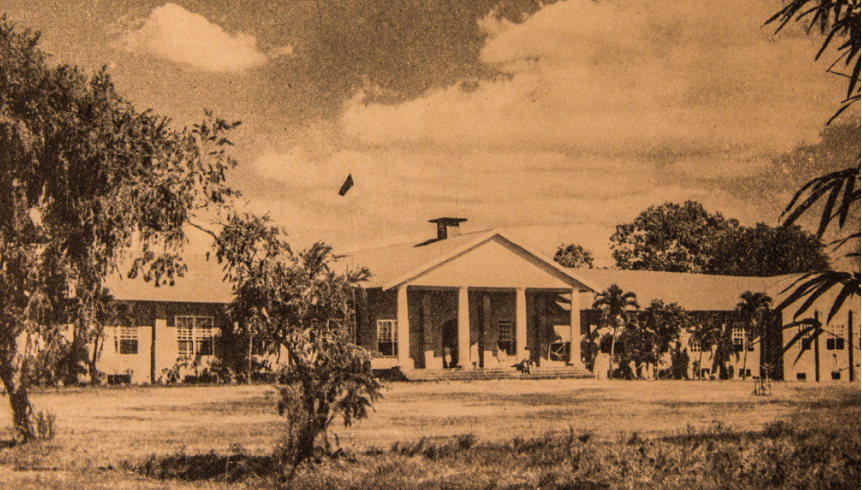
That year, the Far Eastern Division permitted the elevation of the junior college to a senior college, naming it Philippine Union College (PUC). In 1934, Honesto Pascual, Sr., the treasurer, composed Shine on, Forever, which became the school song.
Silang Campus
The ever-increasing number of students prompted the administration to purchase 165 hectares of land in Puting Kahoy, Silang, Cavite in 1972. In 1979, the first batch of freshmen and sophomores arrived at this new campus. In 1981, with the movement of the juniors and seniors from Baesa, the campus transfer was completed.
PUC to AUP
On August 1, 1996, following Republic Act (RA) No. 7722 and by virtue of Reso- lution No. 132- 96, Series of 1996, the Commission on Higher Education (CHED) granted PUC the long-awaited university status, entailing the change from Philip- pine Union College to Adventist University of the Philippines.
AUP Granted an Autonomous Status
“Shine on Forever, Dear AUP,” a compelling command that knows no limits, continues to inspire University leaders, workers, and students from all over the world to strive harder to reach the heights of excellence. AUP acquired deregulated status on October 22, 2001.
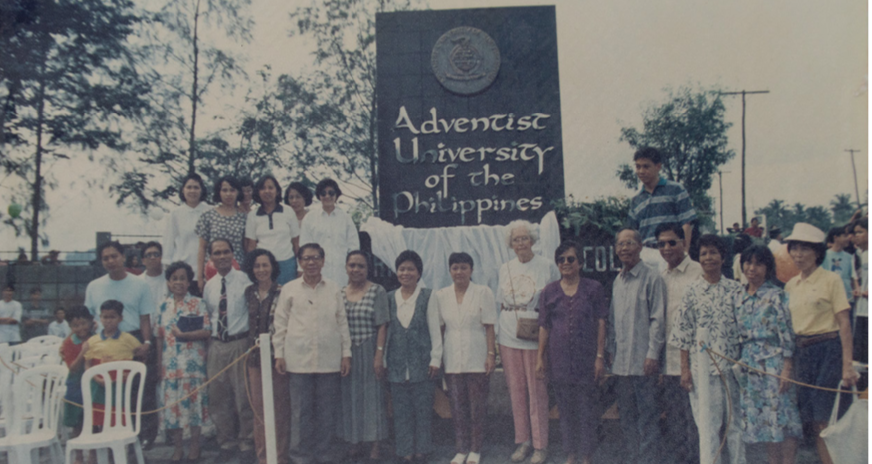
On October 27, 2003, it was awarded an autonomous status for its meritorious achievement in the areas of instruction, research, and community extension services; the high performance of graduates in licensure examinations; and for maintaining a tradition of integrity, excellence, and untarnished reputation in the educational service. On March 7, 2009, the CHED again renewed AUP’s autonomous status from March 2009 to March 2014, which was extended to March 31, 2016. On April 13, 2016, CHED again granted AUP autonomous status, valid until May 31, 2019. On October 4, 2019, AUP re- tained its autonomous status up to May 31, 2023. On September 23, 2024, CHED Memorandum Order No. 7, Series of 2024, by virtue of the Commission en Banc Resolution No. 587-2024, CHED once again granted autonomous status to AUP up to September 15, 2027.
The Newly Registered AUP
On July 8, 2009, the Securities and Exchange Commission (SEC) approved the Articles of Incorporation and By- Laws of the new AUP and was thus granted a Certificate of Incor- poration under Company Registration No. CN200909866 for another term of 50 years.
First Woman President
Throughout its history, AUP has been blessed with visionary leaders who have contributed significantly to its growth and development. The University was served by men presidents until June 1, 2022.
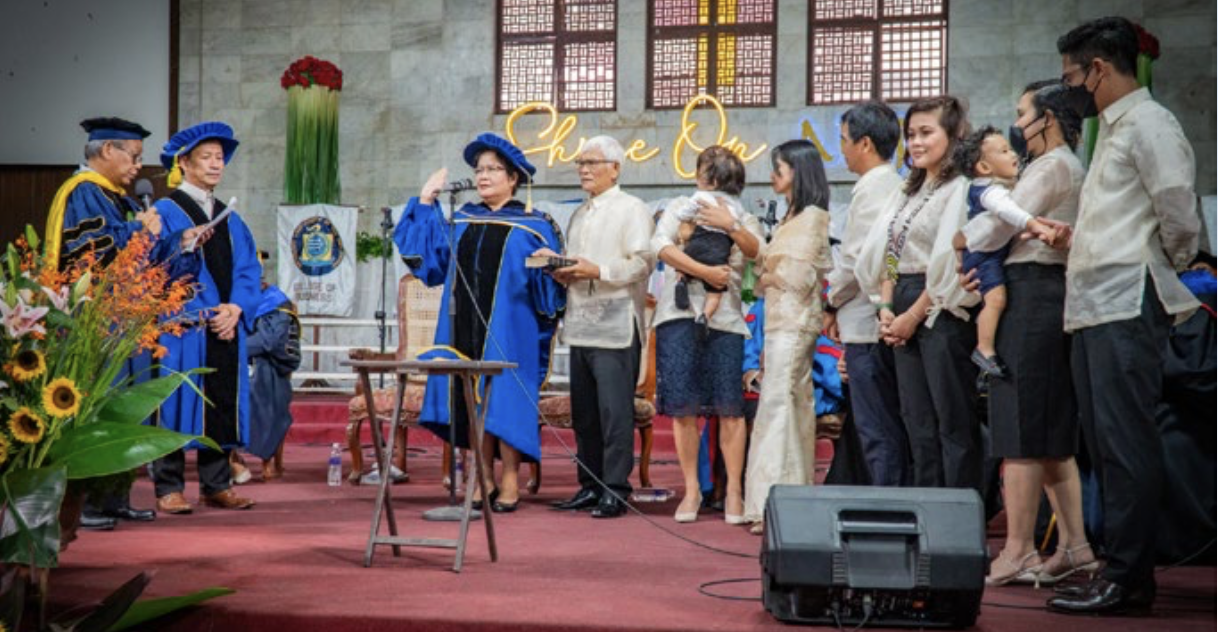
Dr. Arceli H. Rosario assumed the presidency, becoming the University’s eighteenth and first woman president. Her investiture ceremony took place on June 27, 2022. Dr. Rosario brought a wealth of experience, having served for 4 decades in Adventist educational institutions across basic, higher, and graduate education. Her expertise in research and ded- ication to Christian education have been instrumental in shaping AUP’s strategic direction.
AUP’s Accreditation, Recognition and Other Accolades
As a Seventh-day Adventist institution, all AUP’s academic programs are approved and recognized by the International Board of Education (IBE) of the Seventh-day Adventist Church with its headquarters at the General Conference of Seventh-day Adventists, Silver Spring, Maryland, USA. Consequently, the Adventist Accrediting Association granted the University Institutional Accreditation up to December 31, 2027.
Likewise, the Commission on Higher Education (CHED), and the Department of Education (DepEd) of the Republic of the Philippines granted Government Recognition to 30 higher education programs and four basic education programs of the university, respectively. The medicine program was given a government permit in December 2014. The program officially started in August 2015. Thus, AUP offers a total of 34 programs up to the present.
The University was granted by the Commission on Higher Education AUTONOMOUS STATUS for the fourth time from 2003 up to May 31, 2023, for its meritorious achievements in the areas of instruction, research, community extension services, high performance of graduates in the licensure examinations, and for maintaining integrity, excellence and untarnished reputation in the realm of education (But renewal is differed due to the pandemic). These are manifestations of AUP’s genuine commitment to quality, excellence, and global competitiveness.
In its quest to maintain its university and autonomous status as a gauge for quality education, AUP was subjected to voluntary accreditation way back in 1984 for its nursing program under the Philippine Accrediting Association of Schools, Colleges and Universities (PAASCU). In 1985, three programs (Arts and Sciences, Business Administration, Elementary and Secondary Education) were subjected to voluntary accreditation under the Association of Christian Schools, Colleges and Universities – Accrediting Agency Inc. (ACSCU-AAI). To date, 32 out of 34 programs are accredited; 9 of which are Level 4, 15 are Level 3, 6 are Level 2, and 2 are Level 1 through ACSCU-ACI and the Philippine Association of Colleges and Universities Commission on Accreditation (PACUCOA). The Theology program is also accredited by the Association of Theological Education in Southeast Asia (ATESEA).
AUP has also received Institutional Accreditation Award from the Federation of Accrediting Agency of the Philippines (FAAP) in April 2010 and was re-affirmed by the same agency in December 2016 for a period of five years and June 15, 2022 for a period of 2 ½ years. On April 1, 2016, AUP was recognized by CHED as Center of Excellence (COE) in Teacher Education and a Center of Development (COD) in Business Administration. Furthermore, the implementation of the K to 12 program paved the way for AUP to be recognized by CHED as a Delivering Higher Education Institution (DHEI).
On March 19-22, 2018, CHED visited AUP for Institutional Sustainability Assessment (ISA) and AUP was able to pass all the required ratings for a university autonomous status.
AUP was also accredited in January 2017 up to the present by the Professional Regulation Commission (PRC) as a Continuing Professional Development (CPD) Provider for Nurses, Accountants, Professional Teachers, Psychologist, Dentists, Nutritionists, and Medical Doctors to help our constituency earn continuing education units before renewing their licenses. AUP also offers innovative programs such as Straight Programs, International and National Certification Programs.
In line with the government’s thrust for internationalization, AUP affiliated itself with International HEIs for its faculty and student exchange, cultural exchange, research collaboration, and the like.
Administrators, faculty, staff, and students unwaveringly rally behind Adventist University of the Philippines in its commitment to its Mission, Vision, Philosophy, and calling to “Shine on Forever.”
Philosophy, Vision, Mission and Core Values of the University. The mission and vision of AUP are always discussed in classes at the start of every semester. They are reflected in every course syllabi, in the faculty and staff handbook, manual of academic policies, bulletin, brochures and other publications. They are also posted in strategic places.
PHILOSOPHY
The work of education and the work of redemption are one:
to restore in humanity the lost image of God
through the harmonious development
of the mental, physical, social, and spiritual faculties.
MISSION
The Adventist University of the Philippines
is committed to providing quality Bible-based education,
nurturing students for academic excellence,
Christ-like character, and exemplary service.
VISION
Adventist University of the Philippines
envisions to be a leading Adventist educational institution in the Asia-Pacific region.