SLPUM Digital Strategies for Mission Equips Communicators to Advance the Gospel in the Digital Age
by Ele Lunzaga and Charissa Uy
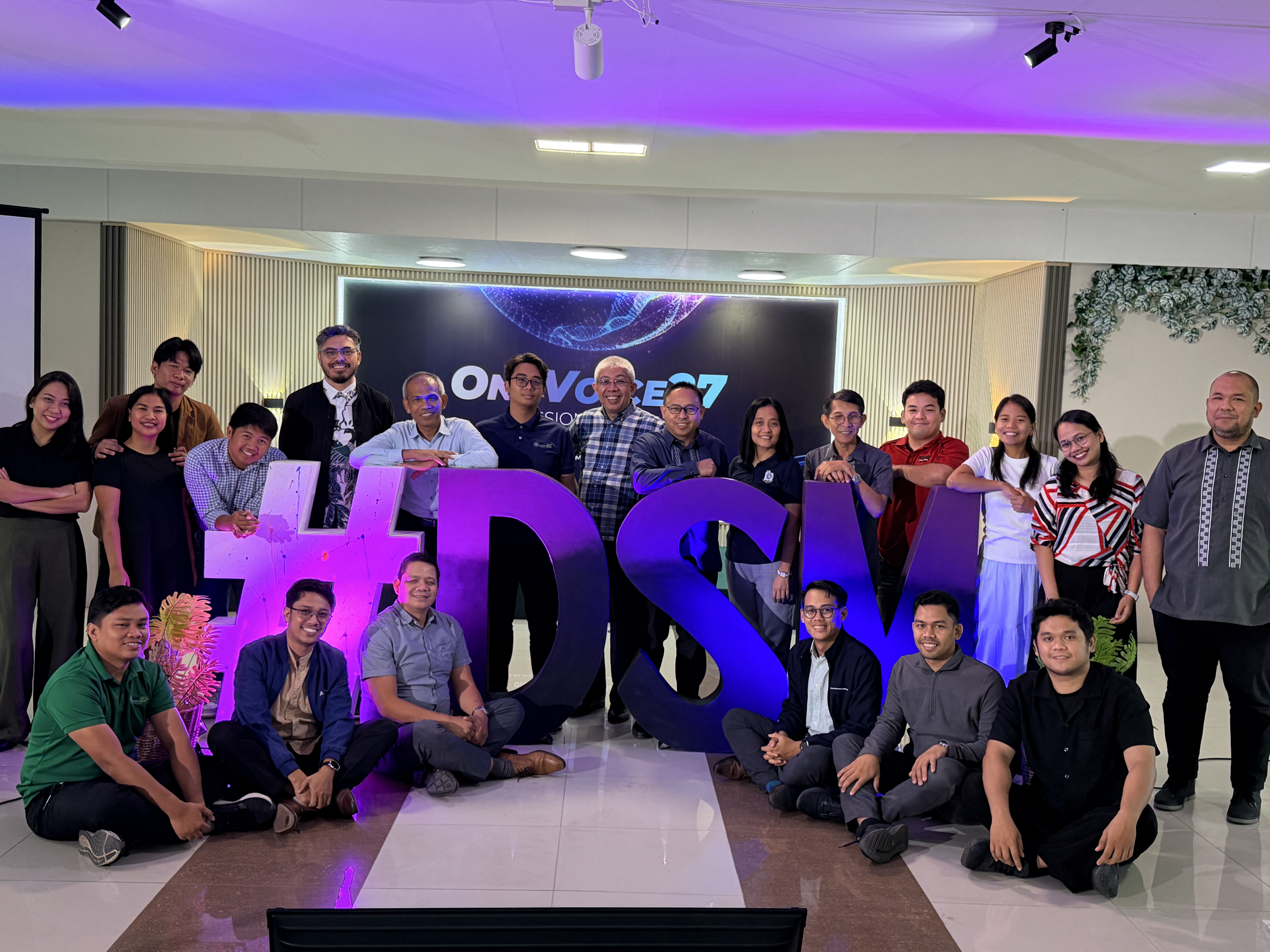
Communication leaders, institutional representatives, and mission-driven practitioners gathered at the Southern Luzon Philippine Union Mission (SLPUM) Headquarters for the Digital Strategies for Mission (DSM) and Adventist Communication Training (ACT) organized by the SLPUM Communication Department under the leadership of Pastor Jose Orbe Jr., SLPUM communication director. The two-day training was held at the SLPUM Headquarters in Lipa City, Batangas on June 2–3, 2026.
The training featured presentations from communication leaders of the Southern Asia-Pacific Division (SSD) and SLPUM. Resource speakers included Pastor Carlito Quidet Jr., SSD communication director; Anthony Stanyer and Edward Rodriguez, SSD associate communication directors; Pastor Jose Orbe Jr., SLPUM communication director; and Melo Anadem Adap-Ong, SLPUM assistant for communication. They shared biblical, strategic, and practical perspectives on communication for mission in the digital age.
Over 12 sessions, delegates gained knowledge and practical skills in mission-centered communication, equipping them to use traditional and digital media more effectively to support evangelism, discipleship, storytelling, and community engagement. Sessions covered the biblical foundations of communication for mission, the role of communication in the early Christian church and Adventist movement, news and media ministry, digital mission strategies, brand alignment and media architecture, church announcements and promotions, spokesperson and crisis management, Adventist identity and social media management, copyright and data privacy, visual language and audiovisual production, OneVoice27 digital engagement, and strategic content management for Adventist media centers.
Technology Serves the Mission, Not the Other Way Around
The training opened with a devotional message by Pastor Gerardo Cajobe, SLPUM president, who set the theological tone for the two days that followed. Drawing from the Great Commission in Matthew 28:19–20, Pastor Cajobe called participants to a clear-eyed understanding of their role: digital platforms exist to serve the mission, not to replace or overshadow it. His charge reminded communicators that while tools evolve, the mandate does not— to proclaim Christ, teach biblical truth, and prepare the world for His return.
This foundational conviction was amplified throughout the training by resource speakers from SSD. Pastor Carlito Quidet Jr., SSD communication director, whose opening address drew a sharp distinction between technology used with purpose and technology used without it. “Tech without mission is noise, manipulation, self-proclamation,” Pastor Quidet declared. “Tech with mission amplifies, leads, and glorifies.” He further challenged every participant to hold each piece of content to a single, non-negotiable standard: “Does this content lead people closer to Jesus?”
Pastor Quidet also clarified the identity of everyone in the room: “We are not merely content creators. You are missionaries in the digital mission.” This reframing, from communicator to missionary, became the animating conviction of the entire training.
Biblical and Historical Roots of Mission Communication
Session 1, facilitated by Pastor Quidet, established that communication is not a modern strategic invention but a divine imperative embedded throughout scripture. “Communication stands at the very heart of scripture,” he affirmed, tracing how patriarchs, priests, and prophets all modeled purposeful proclamation to advance God’s will. From the giving of the Law at Mount Sinai, described as “one of the most structured and significant forms of divine communication,” to the faithful scribal ministry of Ezra, to the incarnation of Christ as the “Word,” the ultimate act of divine communication to humanity, scripture itself is the story of God communicating His love and calling His people to do the same.
Pastor Orbe, in Session 2, carried this biblical thread into the history of the Adventist movement, connecting the early church’s zeal for communication to the present moment. He challenged participants to “embrace the ‘SENDING’ character of communication,” noting that communication’s role in advancing God’s kingdom has never ceased, only the medium has changed. “The medium is always changing,” he observed. “If you don’t keep up, you’ll be left behind.” His call was not for uncritical adoption of every new platform, but for missional discernment — catching up with the times while remaining anchored to the message.
From Invisible to Unmissable: Digital Mission in Practice
Anthony Stanyer, SSD associate communication director, led two sessions that translated theological conviction into practical strategy. His overarching challenge was to move the church “from invisible to unmissable” not through self-promotion, but through intentional, Spirit-led presence in digital spaces.
Drawing on the framework from Richard Stephenson’s Digital Strategies for Mission, Stanyer outlined three foundational steps for a church seeking to engage its community online. The first step, “Build the Porch,” calls churches to create a welcoming digital entry point, an online presence that says to the community, “We are praying for you. How can we pray for you?” The goal is not to drive traffic to an event, but to start a conversation, offer genuine prayer and support, and extend the hospitality of the gospel to those who may never walk through a physical door.
The second step, “Build the Rapid Response Team,” calls for intentional human engagement, trained volunteers or staff who respond to online interactions with care, consistency, and spiritual sensitivity. The third step, “Prepare the Living Room,” speaks to the ultimate aim of digital mission: connecting seekers online to a local church community that is genuinely prepared to welcome them. “The final step is connecting digital seekers to a local church that is prepared to welcome them,” Stanyer explained, emphasizing that digital outreach is not an end in itself but a bridge to embodied community and discipleship.
Stanyer also called for coherence across the Adventist communication ecosystem, which he described as synergy: “We are an orchestra, not a garage band.” He urged communicators to align messaging, optimize digital content for search, and leverage the Adventist identity as a unifying thread across healthcare, education, and church communication. His practical action points included running prayer ads, repurposing content across platforms, and meeting people where they already are, like how Jesus did with the woman at the well.
Telling Stories That Matter: From Local Witness to Global Mission
Edward Rodriguez, SSD associate communication director, spoke to the craft and theology of storytelling as a vehicle for mission. His sessions addressed a persistent gap in Adventist communication, the tendency to report programs rather than people. “Center stories on people, not just programs,” Rodriguez urged. “Find a story in the program, then tell it.”
Rodriguez challenged communicators to move with intentionality and discretion, noting that the most compelling stories are often found not in press releases but in the field, in communities, in classrooms, and in lives transformed by grace. “Most of the compelling stories happen on the ground, in the field,” he said. “Share it to your immediate field, and from there, to the global mission.” He encouraged participants to write with angle and purpose, asking whether a message could be encapsulated in a thirty-second video, a test of clarity and missional focus.
His guiding principle was that Adventist stories should not remain within the church. Rather, they must be written to reach beyond, to transform localized reporting into a localized global witness. “Go ahead before the public can dictate our stories,” Rodriguez exhorted. “Our stories should not be kept within us.” He also reminded participants of the broader geographic context of their work: Adventist communication in this region operates within the 10/40 window, a missional responsibility that demands nothing less than intentional, Spirit-directed storytelling.
On content strategy, Rodriguez reinforced the principle of “one seed, many fruit,” that a single piece of well-crafted content, when repurposed across platforms, can multiply its reach and deepen its impact. He encouraged the use of tools such as Pixel and Flickr for photo archives and the Adventist Media Exchange for sharing digital assets across the global church community. “One message, wider reach,” he said. “There is no one content platform.”
Adventist Identity, Social Media, and the Frontline Mission Field
Stanyer returned in a later session to address the management of Adventist social media with the same conviction that had characterized his earlier presentations. “Social media is a frontline mission field,” he stated plainly, and the implications of that designation are significant; it demands strategy, intentionality, and accountability.
He warned against what he described as a content fatigue problem: churches and institutions that over-post without purpose risk losing their audience rather than building it. “We need a plan when posting events, a maximum of fifteen posts, because people experience content fatigue,” he noted, calling for the development of a content matrix that balances the varied needs of the audience with the church’s missional priorities. The role of the social media manager, Stanyer emphasized, is not administrative support, it requires creativity, planning, and a deep understanding of both the audience and the mission. “Social media manager is not your office secretary,” he said. “It takes a lot of work to curate content ahead. Planning also.”
Most critically, he cautioned against allowing algorithmic logic to shape the church’s discipleship agenda: “Don’t let the algorithm disciple your audience.” Trends are to be used as bridges, not identities. The church’s presence in digital spaces must be governed by a clear framework for intentional mission — filling the feed not merely to be seen, but to serve, to build trust, and to create connection.
OneVoice27: A Movement Toward the 2,000th Anniversary of the Gospel
The speakers also contextualized DSM within the Seventh-day Adventist Church’s broader mission framework. Participants gained a clearer understanding of how DSM supports the General Conference’s I Will Go strategic plan, the Southern Asia-Pacific Division’s Mission REAPS initiative, and OneVoice27, a global evangelistic movement culminating in September 2027 to commemorate the 2,000th anniversary of Jesus’ baptism. The presentations demonstrated how these strategies and initiatives work together to advance the church’s mission through coordinated communication, digital outreach, discipleship, and community engagement. Through the unifying theme, “All Things New: Hope Starts Here,” OneVoice27 seeks to help people know God, know the Bible, and know the Church. The discussions emphasized that communication is an essential component of the church’s efforts to reach, disciple, and engage communities worldwide.
Stanyer conveyed the personal and missional weight of this initiative with directness: “OneVoice27 is you. You will be the one to bring back that good news.” He outlined the movement, encouraging participants to align their touchpoint campaigns with the OneVoice27 calendar of topics, requiring careful planning, coordinated action, and faithful implementation across all church communication channels.
Pastor Orbe emphasized how we are now in the tradigital age in the mission. Not shunning the traditional strategies for mission but rather working hand-in-hand with digital strategies to innovate and further the gospel work. “Continue what you are doing [in your respective missions and conferences], but we need to reach these people to become relevant in our time.” Highlighting that the DSM is the means of communicating the Adventist message today in the postmodern times.
Stewardship, Privacy, and Crisis Management Communication
Pastor Orbe led sessions that addressed both the legal and the pastoral dimensions of responsible communication, covering data privacy, digital stewardship, and crisis management as interconnected obligations of every church communicator.
On data privacy, he grounded the discussion in Philippine law, specifically Republic Act 10173, the Data Privacy Act, and the Cybercrime Prevention Act, noting the legal accountability that attaches to church officers, including the president and the designated Data Protection Officer (DPO). Institutions that are Securities and Exchange Commission-registered are required to appoint a certified DPO who undergoes annual certification. More fundamentally, however, Pastor Orbe framed data stewardship as a missional concern: how the church handles the personal information entrusted to it is a direct reflection of the dignity it accords to every individual made in the image of God. Compliance is not merely bureaucratic, “it is an act of care.”
His session on crisis management in the local church carried this ethic of care into some of the most difficult moments a church communicator will ever face. A crisis, he explained, is a reputation-defining event, unpredictable in its timing but often preceded by warning signs that a vigilant community can learn to recognize. Whether it involves an allegation of misconduct, a natural disaster, financial irregularity, or a tragedy involving church members, a crisis unfailingly arrives in three stages: the planning stage before it strikes, the period of chaos during its unfolding, and the season of healing and learning that follows. The church, Pastor Orbe emphasized, must be perpetually engaged in the first stage: watching, preparing, and training, so that it is never caught without a plan when the second stage arrives.
Central to his presentation were seven core principles that must govern the church’s response in any crisis: openness, integrity, accuracy, consistency, flexibility, appropriate appearance, and fairness. Pastor Orbe walked participants through a practical crisis response framework built on eight sequential steps, from gathering verified facts and convening the crisis team to drafting a statement anchored in four non-negotiable message points: expressing concern, assuring cooperation with authorities, promising updates, and directing all inquiries to a single designated spokesperson.
In the post-crisis phase, Pastor Orbe called communicators to resist the temptation to return prematurely to normalcy. The overarching conviction of Pastor Orbe’s sessions was consistent with the spirit of the entire training: the church communicates not merely to manage perception but to embody the values it proclaims. In moments of crisis, as in moments of celebration, the church’s communication is itself a form of witness.
Communication for Mission
For AUP, the training provided valuable insights that can further strengthen communication education, digital storytelling, media production, and mission-centered communication initiatives within the University.
The broader message of the training, that communication is not merely a function of the church but an expression of its identity and calling, resonates with AUP’s own understanding of education as mission. As Pastor Quidet articulated in his closing challenge, the task before every participant was clear: to become “mission-focused, Spirit-led communicators committed to using every available platform to share hope and advance God’s work.”
The lessons gained reinforce the Department of Development Communication’s commitment to preparing communicators who can effectively engage diverse audiences while using communication as a tool for service, community engagement, and mission. In a separate interview, Pastor Quidet emphasized how communication supports the church and its mission, reaching people beyond its walls. “God has called you to be part of the Development Communication,” he encouraged young people to accept the call as Adventist communicators.
The event concluded with a commitment service led by Pastor Quidet, who challenged participants to become mission-focused, Spirit-led communicators who use every available platform to share hope and advance God’s work. He closed the two-day training with a prayer of dedication, commissioning attendees to apply the principles and strategies they had learned in support of the church’s mission. As emphasized throughout the training, technology may change, but the mission remains the same.
Representing AUP were Dr. Ele D. Lunzaga, Development Communication department chair, and Ms. Charissa Uy, the University communication officer. They joined communication directors and representatives from SLPUM fields, including the Cavite Mission, Mindoro Island Mission, Palawan Mission, South-Central Luzon Conference, and Southern Luzon Mission, as well as delegates from institutions such as Naga View Adventist College, Adventist Hospital Palawan, the Philippine Publishing House, and the 1000 Missionary Movement.